Public power

Platte River is public power

Owned by the communities of Estes Park, Fort Collins, Longmont and Loveland, Platte River delivers electricity through a not-for-profit model that prioritizes local accountability, long-term value and community interests. As a public power utility, we keep our communities at the center of our decisions, from meeting today’s energy needs to planning for the future.

What is public power?

Public power utilities are community-owned electric utilities that provide service on a not-for-profit basis. Across the United States, more than 2,000 public power utilities serve approximately 48 million people.

Unlike investor-owned utilities, public power utilities are accountable to the communities they serve. Decisions are made locally, with a focus on reliability, responsible financial management and meeting community priorities.

Public power in northern Colorado

Platte River Power Authority is the not-for-profit, community-owned wholesale electricity provider for Estes Park, Fort Collins, Longmont and Loveland.

Those four owner communities govern Platte River through a board of directors made up of elected officials and technical representatives from each community. This local governance model helps ensure that decisions reflect the needs and priorities of the communities we serve.

Because we are community-owned, our success is directly connected to the success of our owner communities.

What public power means for you

At Platte River, public power means that the people and communities we serve come first.

Reliable service

Providing safe, reliable electricity is our primary responsibility. We plan for the long term so the power our communities depend on is available whenever it’s needed.

Local accountability

We are governed by representatives from our owner communities and are accountable to the people we serve.

Transparent decision-making

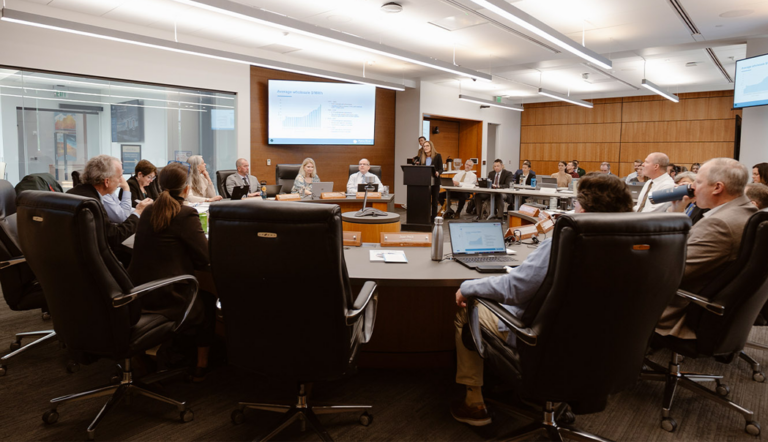
Public board meetings and open governance provide visibility into how decisions are made and how resources are managed.

Not-for-profit service

Revenue is invested back into utility operations, infrastructure and future energy resources rather than distributed to shareholders.

Environmental stewardship

Platte River works to balance reliability, affordability and sustainability as we continue progress on our shared energy transition and support community goals.

Invested in our communities

Public power is about more than providing electricity.

As a community-owned utility, Platte River supports the communities we serve through educational partnerships, workforce development initiatives, community events, scholarships and employee volunteerism. These investments help strengthen the communities that own and govern our organization.

FAQs

Public power utilities are community-owned electric utilities that operate on a not-for-profit basis. More than 2,000 public power utilities serve communities across the United States. Learn more at publicpower.org

Platte River is owned by the four communities we serve: Estes Park, Fort Collins, Longmont and Loveland.

No. Platte River is a not-for-profit public power utility. Revenue is reinvested into utility operations, infrastructure and future energy resources rather than distributed to shareholders.

Platte River is governed by a board of directors made up of elected officials and technical representatives from each owner community. Learn more.

Public power provides local oversight, community accountability, transparent governance and a focus on reliable service and long-term value for the communities served.

Platte River generates and delivers wholesale electricity to Estes Park Power & Communications, Fort Collins Utilities, Longmont Power & Communications and City of Loveland Utilities. Those utilities provide retail electric service directly to homes and businesses.

Accessibility notice:
Per the Americans with Disabilities Act (ADA), Platte River Power Authority will provide reasonable accommodation to qualified individuals with a disability who need assistance. Please email us at [email protected] or call 970-226-4000. “Walk-in” requests for auxiliary aids and services may be honored to the extent possible but can be unavailable if advance notice is not provided.

TOP