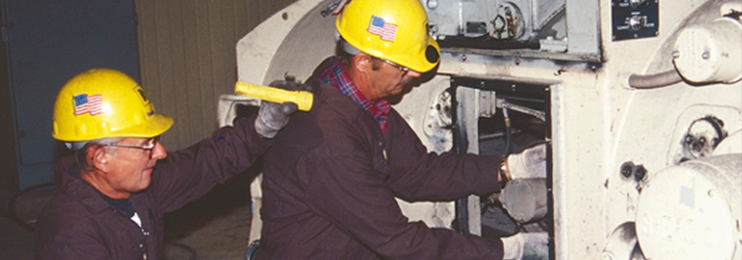
When Rawhide Energy Station first came online in 1984, it marked a turning point for Platte River and its owner communities. It was a promise of reliable, cost-effective power for decades to come. But even the most advanced facilities require care, and from the very beginning, Platte River understood that scheduled outages would be essential to keeping that promise.
Just one year after Rawhide began operation, the plant experienced its first major maintenance outage in May 1985. For three weeks, crews worked around the clock, taking apart major components for inspection and repair. As General Manager Jim Pendergrass explained, the outage was “preventive medicine, every power plant does it.” That early effort set the tone for a culture of proactive maintenance that continues today. The result? Rawhide earned an “A-plus” for availability in its first year, operating well above the national average, a testament to the foresight behind planned outages.
Over the decades, these outages have grown in scope and sophistication. Minor outages, lasting a few days, allow teams to address routine wear and tear, while major outages, often spanning several weeks, provide opportunities for comprehensive inspections, upgrades and modernization. These efforts are anything but routine; they require meticulous planning, coordination across departments and often hundreds of contractors working alongside Platte River employees.
One of the most extensive outages occurred in the fall of 2015. For six weeks, Rawhide underwent a sweeping overhaul that included a complete steam turbine and generator rebuild, extensive boiler tube replacements and installation of a new distributed control system (DCS). This single project consolidated 17 separate control systems into one, improving reliability, cybersecurity and operational efficiency for decades to come. The outage also featured major capital investments, nearly $6.8 million in projects and $17.4 million in operations and maintenance, underscoring the scale and importance of these efforts.
Family Day – a now decades long tradition – became a hallmark of major outages, giving employees the chance to share their work with loved ones through plant tours and luncheons. These moments remind us that outages aren’t just about equipment – they’re about people, teamwork and pride in what we do.
The most recent major outage in 2025 showcased that same spirit on an even larger scale. Coordinating up to 100 Platte River employees, 250 contractors and nearly $700,000 per day in services and materials is no small feat, yet the Rawhide team approached it with professionalism, positive attitudes and care for one another. Highlights included replacing nearly six miles of superheat tubing, requiring a 120-ton crane and precision work on the 14th floor, along with critical overhauls of coal mills, fans and turbine components. The Ovation Evergreen control system upgrade was completed ahead of schedule and modernization of dust collection systems continued to improve safety.
Beyond the technical achievements, this outage reflected the values that define Platte River. Volunteers supported safe operations, retirees returned to lend their expertise and a “game ball” tradition recognized individuals who went above and beyond.
Why do these outages matter? They safeguard what our communities depend on: reliable, affordable, environmentally responsible electricity. By addressing issues before they become problems, Rawhide continues to deliver consistent performance year after year. These outages also provide opportunities to modernize equipment, improve environmental performance and integrate new technologies that support our long-term goals.
As we look ahead, the tradition of proactive maintenance remains as vital as ever. Each outage, whether major or minor, is a reminder that reliability doesn’t happen by chance. It’s the result of planning, teamwork and a collective commitment to excellence. For more than 40 years, Rawhide’s outages have been more than maintenance windows; they’ve been milestones in a legacy of service to our communities. The results have been a lifetime reliability of 97% and a production of over 80 million low-cost MWh to our owner communities since 1984.