At the National Coal Users’ Group Conference, a simple show of hands changed everything.
As Jace Staponski, senior plant mechanical engineer, wrapped up his presentation on Rawhide Energy Station’s dust collection system, the room went quiet. Then came his question: how many of you have experienced a combustible dust explosion at your plant? Nearly two-thirds of the room raised their hands. A follow-up question asked how many explosions involved injuries or fatalities. About a third of the hands remained raised.
For the Platte River team sitting in that room, the realization landed hard. Rawhide had been fortunate. No catastrophic explosions. No lives lost. But the risks were always real.
That moment crystallized what had already been more than a decade in the making: combustible dust safety isn’t optional and it doesn’t wait even when a unit is slated for retirement.
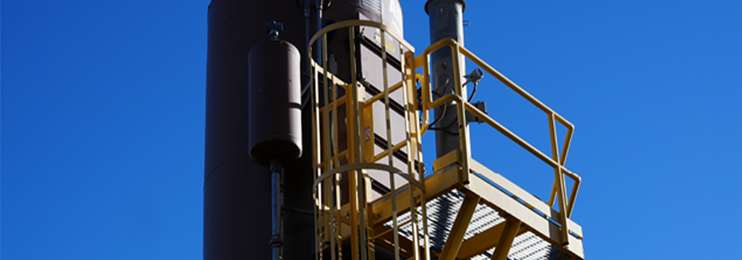
Rawhide Unit 1 was commissioned in 1984 when dust collection systems were considered progressive for their time. Designed largely for winterization, the original systems predated modern combustible dust standards. Over time, serious deficiencies became clear, most notably dust collectors located inside buildings with deflagration panels venting indoors, creating the potential for devastating secondary explosions.
“At the time, we didn’t fully understand combustible dust the way we do now,” said Tyler Michie, manager of generation engineering. “It was educational and eye‑opening to have those deficiencies pointed out.”
In the early 2010s, Platte River began systematically evaluating combustible dust risks, starting with the rotary car dumper. Coal dust accumulation was extreme, requiring frequent heavy‑equipment cleanup. In 2013, the team partnered with Air Cure to replace five indoor collectors with a single outdoor collector safely vented outside. The redesign dramatically improved dust capture, visibility and access and eliminated the need for skid‑steer cleanup. Today, the rotary car dumper requires only a light washdown every few weeks.
Improved dust capture at the source revealed new challenges downstream. Rather than repeatedly collecting and moving dust, the team pursued a more ambitious solution: collect it once and burn it in the boiler. That vision led to a pneumatic conveying system capable of transporting dust more than half a mile, along with upgrades to safely vent indoor collectors outdoors and add operational flexibility.
The project was not without setbacks, including minor unexpected fires during installation, complex retrofits, pandemic‑era outages and the challenge of investing in a unit later slated for retirement. When Platte River announced plans to retire Unit 1 by 2029, leadership chose to continue.
“Even though the unit is shutting down, safety doesn’t sleep,” said Danielle Sosa, plant mechanical engineer II.
The final phase addressed the remaining transfer point dust collectors, bringing them up to industry standards. In November 2025, the last collectors were commissioned, completing a system-wide modernization that had been more than a decade in the making.
“Once two systems are tied together, shared ownership requires coordination every day,” said Jeremiah Stilson, plant electrical engineer I.
In January 2026, Platte River received the Coal Users Group Innovative Initiative Award for Rawhide’s dust collection modernization, a recognition of sustained commitment, collaboration and the belief that protecting people is always worth the effort.